25th & 26th of June 2026
On 25–26 June, 30 participants gathered in Bulgaria for a feedback workshop dedicated to the ROMDIEM documentary on the Roma Holocaust (Samudaripen). The event brought together educators, civil society representatives, Roma community members, researchers, and stakeholders to reflect on the documentary and discuss its educational value and impact.
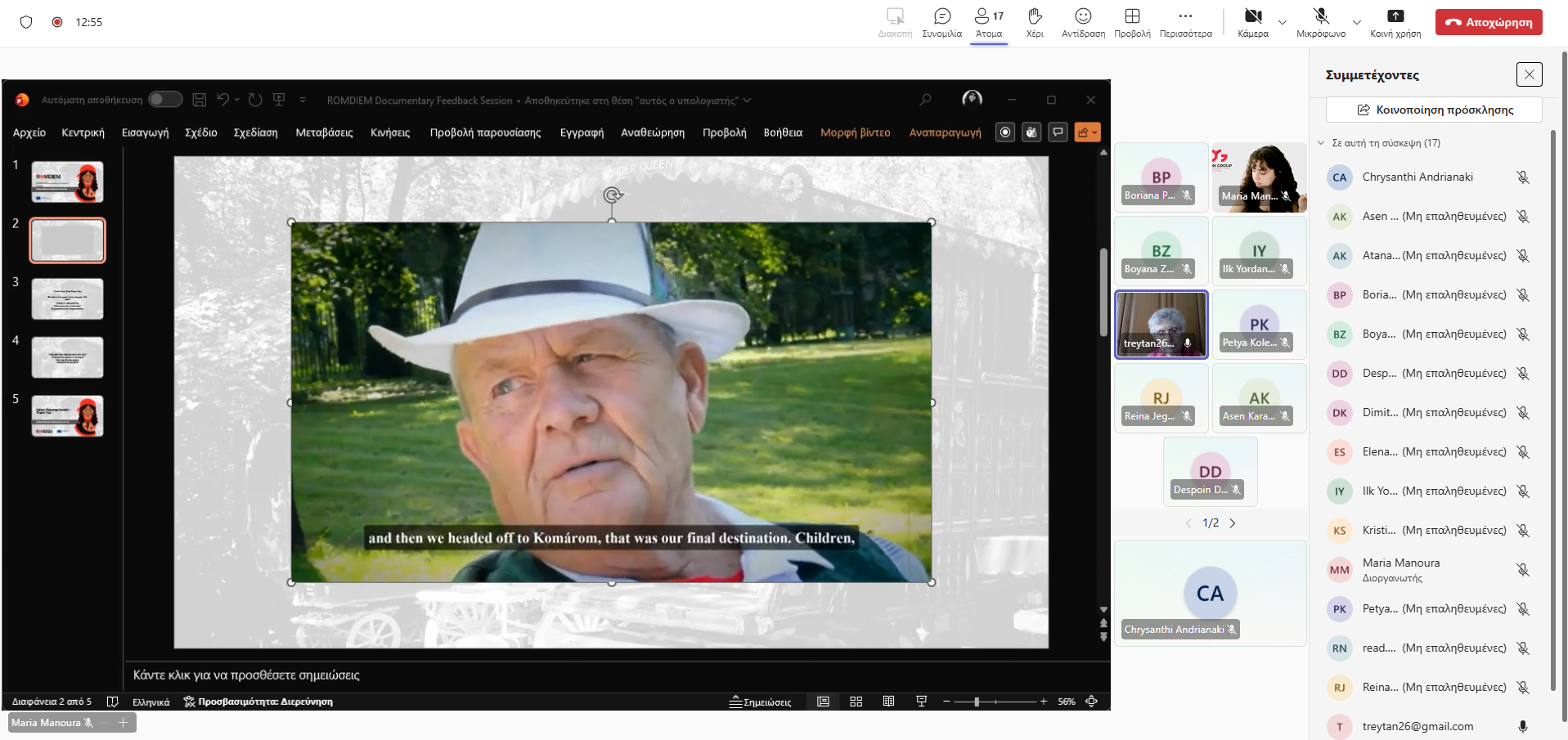
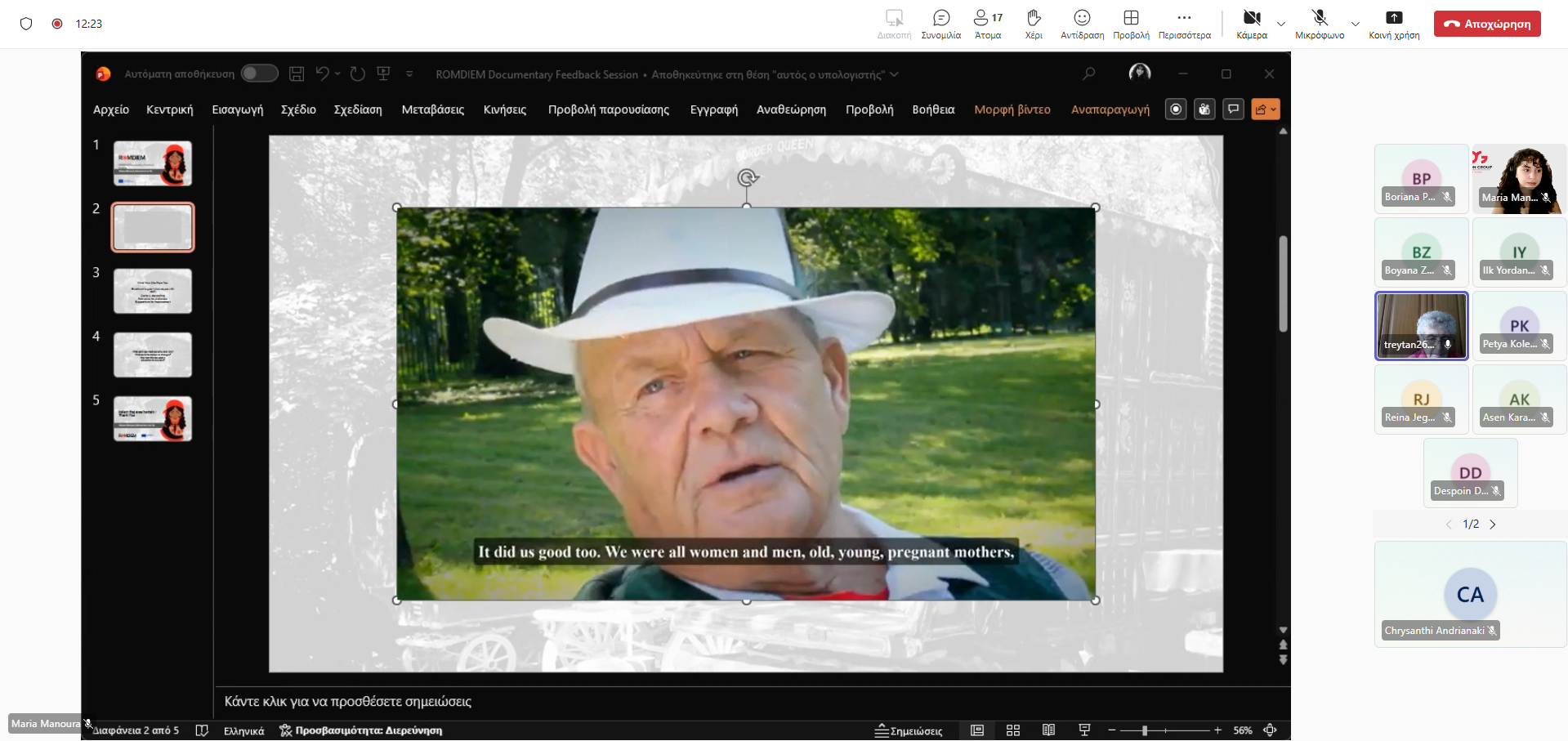
Throughout the workshop, participants shared their impressions of the documentary, highlighting its powerful emotional impact and the importance of giving voice to a largely underrepresented chapter of European history. The personal testimonies featured in the film were widely recognised as its strongest element, allowing viewers to connect with the lived experiences of Roma survivors and their families.
The discussions also emphasised the documentary’s role in raising awareness about the Roma Holocaust and encouraging dialogue on historical memory, human rights, discrimination, and the importance of preserving Roma heritage for future generations. Participants noted that the combination of personal testimonies, historical context, and artistic expression created a meaningful and engaging viewing experience, making the documentary a valuable educational resource.
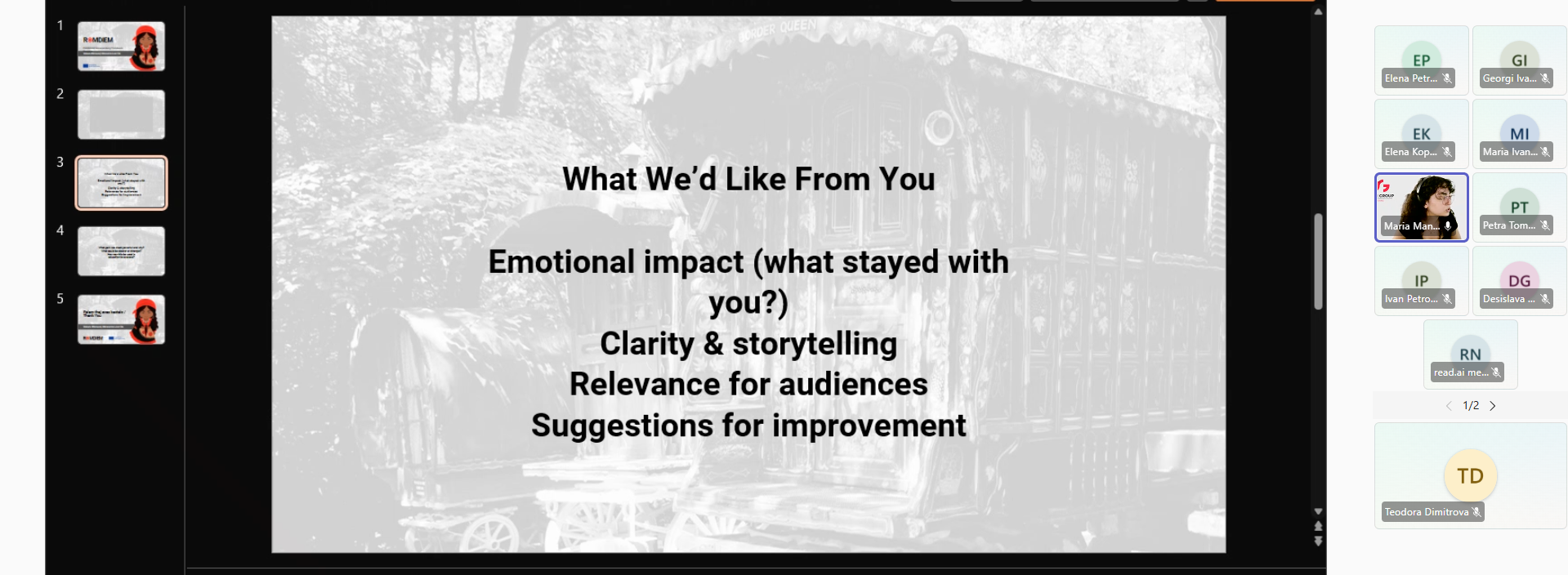
The workshop also generated constructive recommendations for further enhancing the documentary. Participants suggested improving the flow between different segments and speakers, creating clearer transitions, and considering the grouping of testimonies by country to provide greater historical coherence. While the artistic performances were appreciated for their creativity, some participants recommended integrating them more seamlessly into the overall narrative.
Several participants also encouraged the inclusion of more voices from younger Roma generations to demonstrate how the legacy of historical trauma continues to shape present-day experiences. Others proposed featuring representatives from public institutions and policymakers to strengthen the documentary’s advocacy dimension and better connect historical remembrance with contemporary action. Additionally, participants suggested incorporating more examples of resilience and positive change to complement the emotional testimonies and showcase progress in Roma inclusion.
One participant summarised the experience by stating:
“The most powerful part was hearing personal testimonies—these were not just historical events but real people’s lives.”
The feedback collected during the workshop will contribute to the further refinement of the ROMDIEM documentary, ensuring that it remains an impactful educational tool that promotes remembrance, combats discrimination, and strengthens awareness of the Roma Holocaust across Europe.