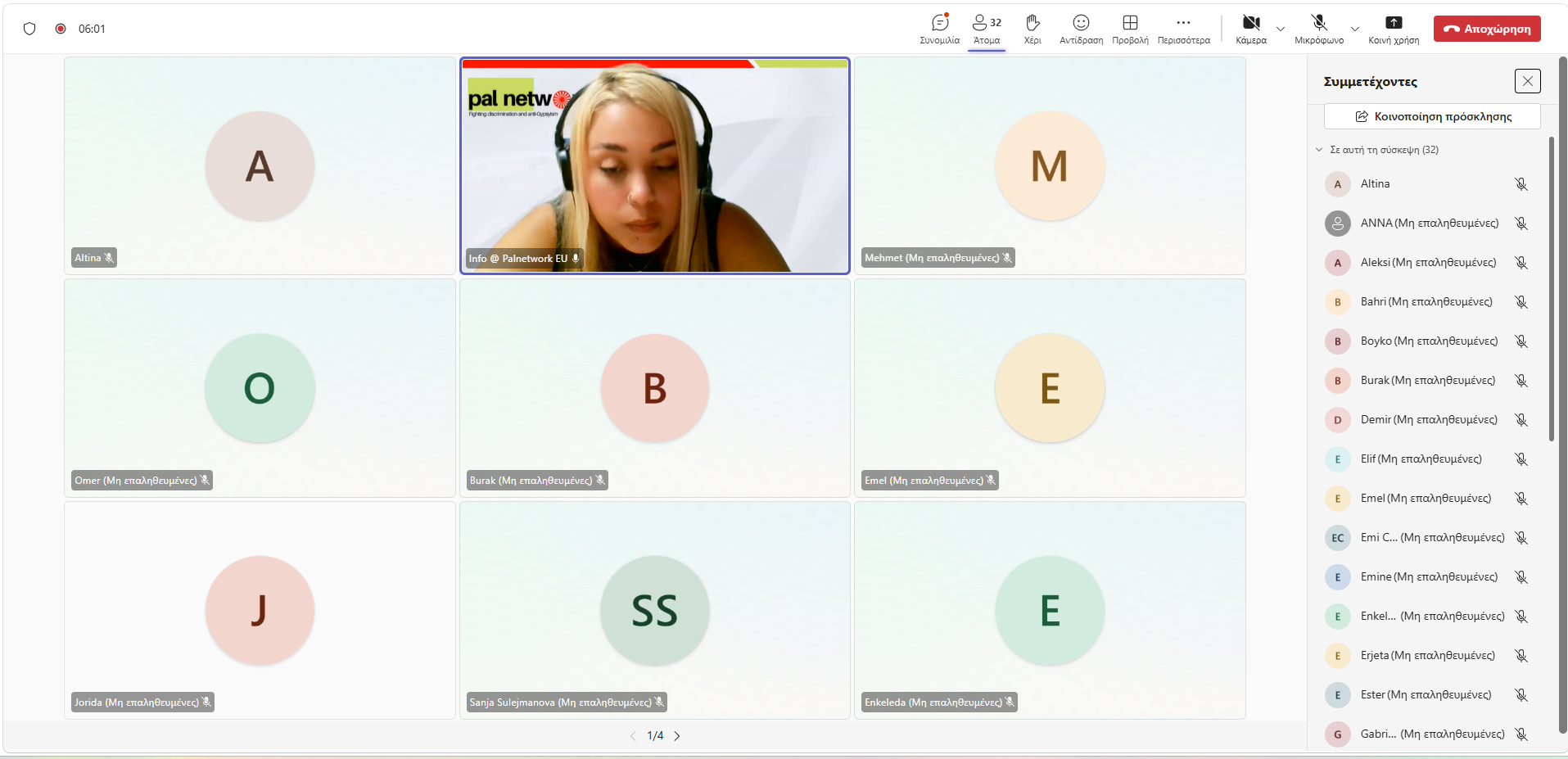
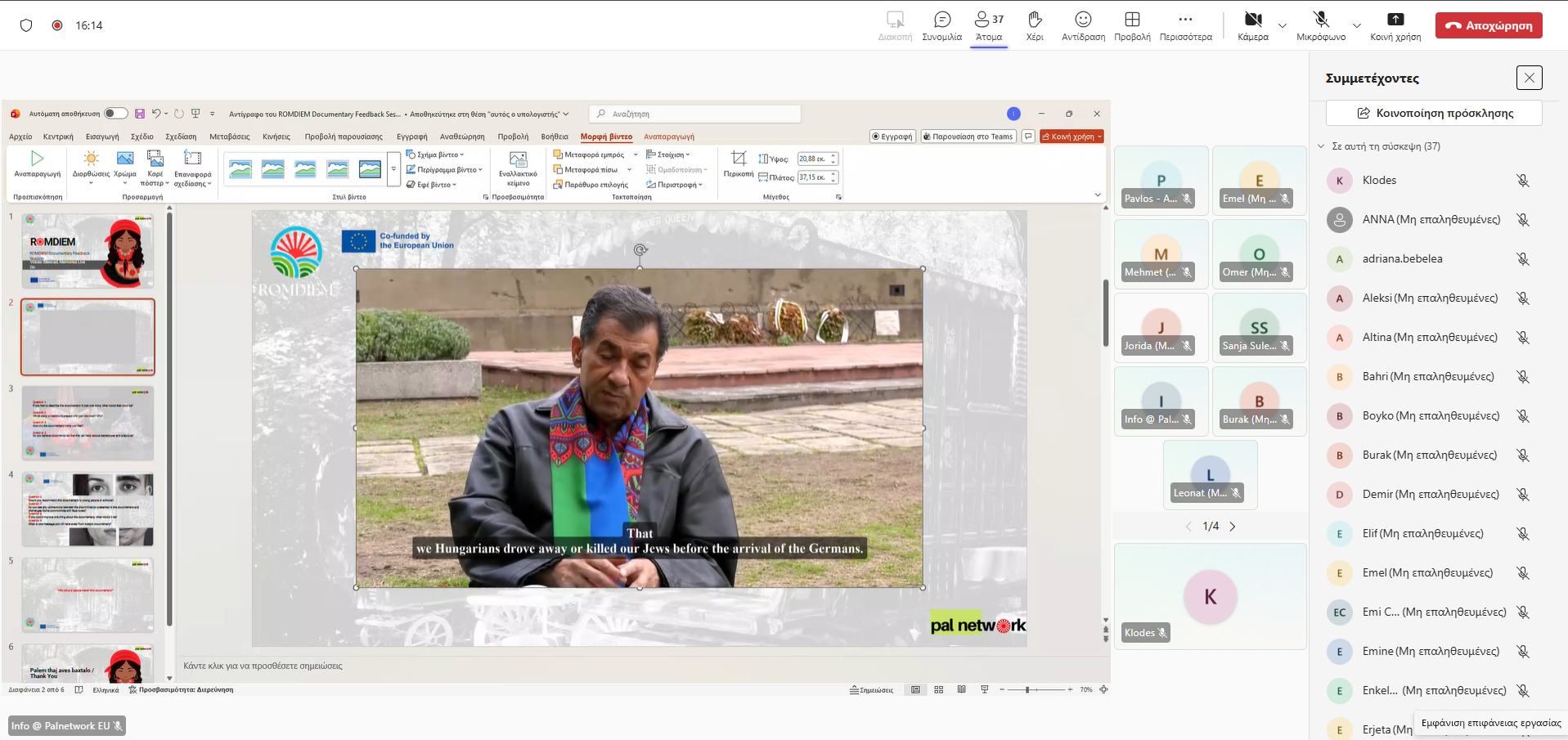
On 29 June 2026, the Belgian ROMDIEM Feedback Workshop was conducted with the participation of 37 people, bringing together participants to reflect on the project documentary and explore its role in preserving the memory of the Roma Holocaust (Samudaripen).
The discussions centred on the importance of personal testimonies, historical remembrance, and the need to strengthen education about Roma history as a means of promoting inclusion, equality and human rights.
Participants agreed that the documentary successfully connects historical events with the challenges that Roma communities continue to face today. The conversations emphasised that prejudice and discrimination remain present in contemporary society, making remembrance and education essential tools for combating stereotypes and fostering greater understanding.
One of the most powerful aspects of the documentary, according to participants, was the inclusion of personal testimonies from survivors and their descendants. These stories illustrated the long-lasting effects of fear, trauma and discrimination while demonstrating the importance of preserving lived experiences for future generations.
Throughout the workshop, participants highlighted the documentary’s educational value, expressing strong support for its use in schools, universities and youth activities. They agreed that historical education is key to increasing awareness of the Roma Holocaust and encouraging critical discussions about human rights, equality and social inclusion.
The workshop also generated valuable recommendations for the further development of the documentary. Participants suggested expanding the film with testimonies from additional countries to provide a broader European perspective and adding a concluding section showcasing positive examples of Roma communities and successful inclusion initiatives. Other recommendations included dividing the documentary into shorter thematic episodes to facilitate its use in educational settings and introducing voice-over narration to improve the flow of the story while preserving the authenticity of the original testimonies.
Among the reflections shared during the discussions were:
“The story that stayed with me the most was the one describing how many survivors remained silent for decades because of fear, discrimination and trauma. It made me realise how important it is to create spaces where these stories can be heard.”
“I think this needs to be shown especially in classrooms of high school students to actually start having some real impact.”
“History should never be forgotten. By remembering the stories of those who suffered and listening to voices that have often been ignored, we become more responsible for building a society based on respect, dignity, equality and human rights.”
Looking ahead, participants expressed strong interest in continuing the conversation through additional educational activities and future screenings of the documentary. Many also recommended producing shorter thematic clips that could be integrated into school and university curricula, making the documentary even more accessible as a teaching resource.
The Belgian workshop reaffirmed that the ROMDIEM documentary is not only a powerful record of an overlooked chapter of European history but also an effective educational tool that promotes remembrance, empathy and dialogue. By preserving these stories and encouraging critical reflection, the project contributes to building a more inclusive Europe where the experiences of Roma communities are recognised, remembered and respected.