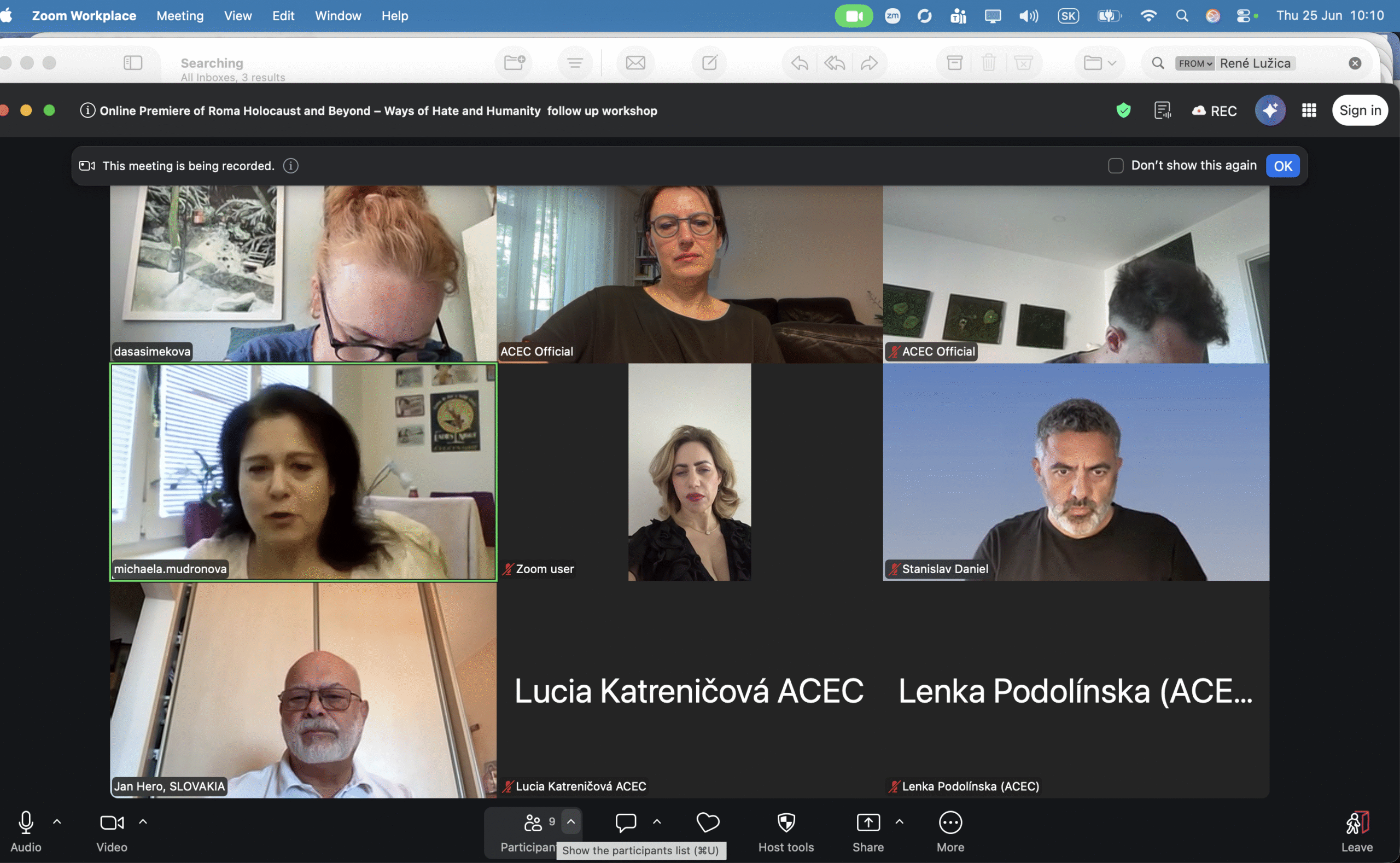
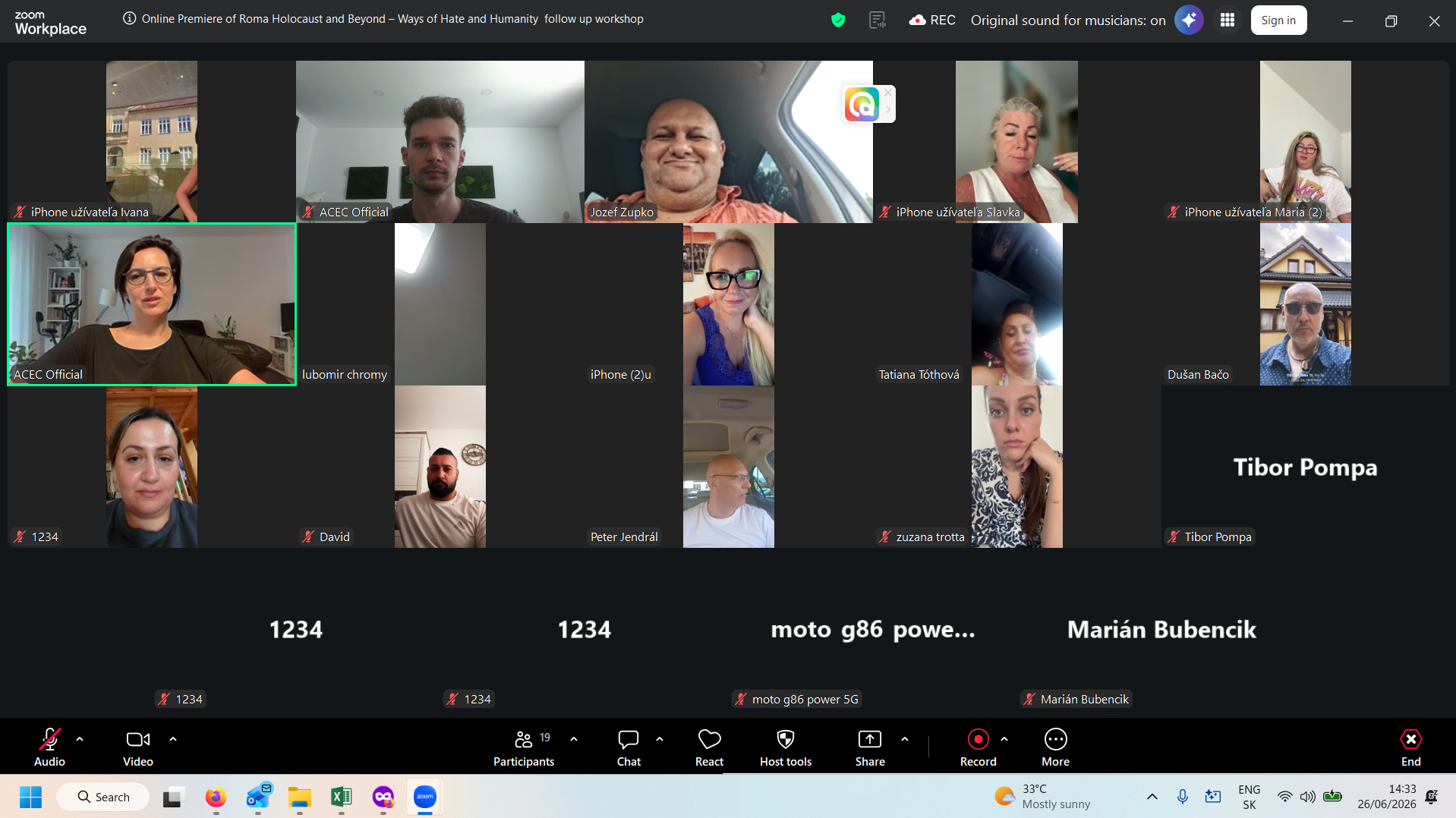
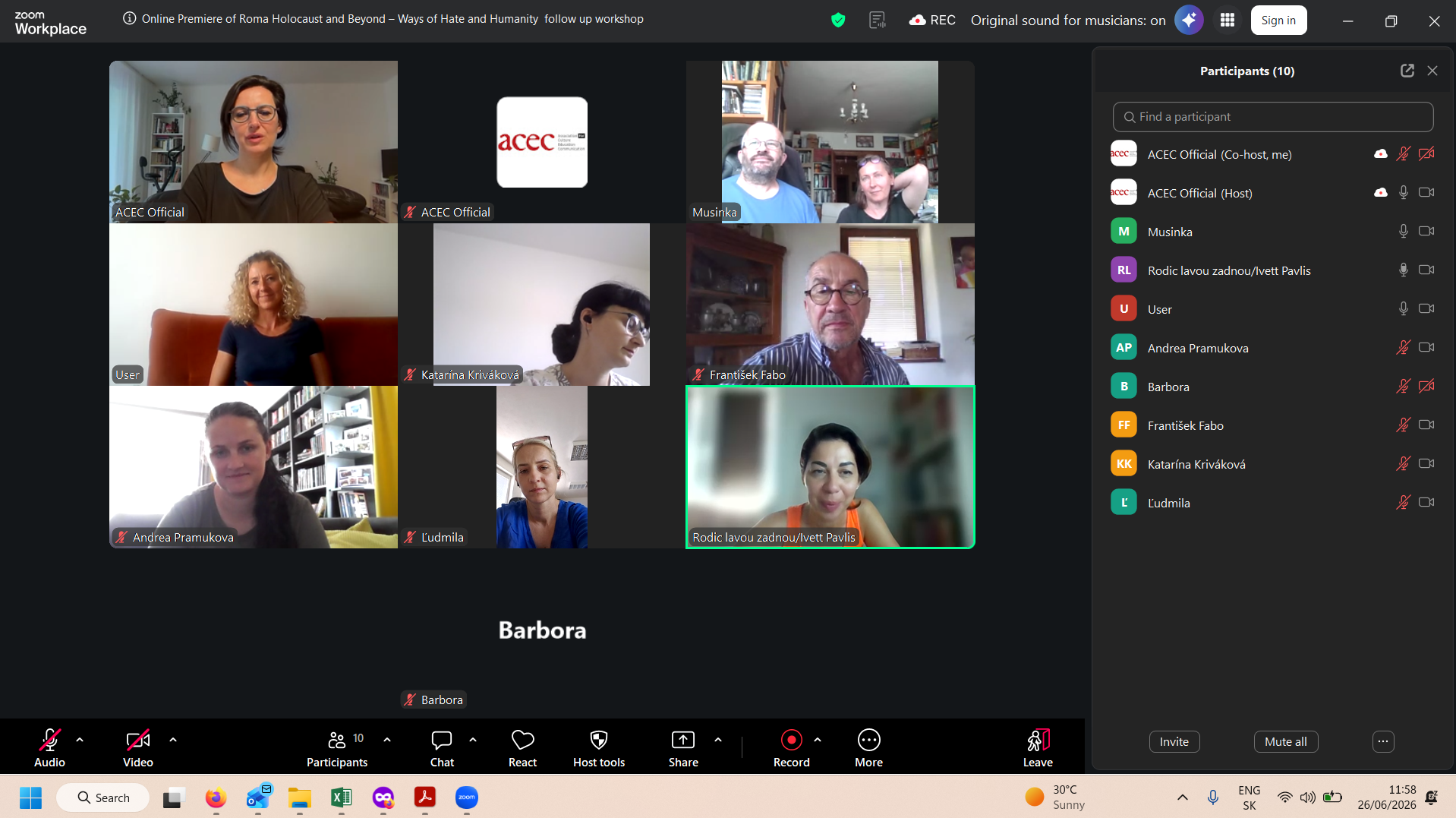
On 25 and 26 June 2026, the Association for Culture, Education and Communication (ACEC) organised a series of three online ROMDIEM feedback workshops in Slovakia, bringing together 38 participants, including educators, researchers, NGO representatives and members of Roma communities. The workshops provided an opportunity to reflect on the ROMDIEM documentary and explore its educational value, while discussing practical ways to preserve the memory of the Roma Holocaust (Samudaripen) and promote inclusion through education.
Throughout the discussions, participants emphasised the importance of documenting the experiences of Roma communities and recognised the documentary as a significant contribution to preserving an often-overlooked chapter of European history. The personal testimonies featured in the film were consistently identified as its most powerful element, helping audiences connect historical events with the realities that many Roma communities continue to experience today.
Participants agreed that remembrance should extend beyond commemorating the past. The documentary encouraged meaningful reflection on human rights, discrimination, prejudice and social inclusion, while highlighting the need to address the continuing challenges faced by Roma communities across Europe. Many participants stressed that authentic personal stories are far more effective in engaging young people than traditional teaching methods, making the documentary a valuable educational resource.
The workshops also generated a wide range of constructive recommendations for strengthening both the documentary and the broader legacy of the ROMDIEM project. Participants proposed developing shorter thematic versions of the documentary for different audiences, creating educational modules and teaching materials based on its content, and translating the documentary into Slovak to increase accessibility nationwide. They also highlighted the importance of preserving the extensive archive of interviews and testimonies collected throughout the project, recognising it as a valuable resource for future research, education and awareness-raising initiatives.
Among the reflections shared during the workshops were:
“Children understand history much better when they hear authentic personal stories from people who experienced discrimination or whose families lived through these events.”
“The documentary is an important milestone, but it should be complemented by shorter thematic materials tailored to different audiences.”
“The project should not end with the film. It has the potential to become a foundation for future educational programmes and cooperation.”
Participants expressed strong interest in continuing the project’s impact through additional educational activities, public discussions and future documentary screenings. Suggestions included organising workshops around the International Roma Holocaust Remembrance Day (2 August), promoting the Slovak-subtitled version of the documentary, strengthening cooperation with schools and educational institutions, and developing a sustainable platform for preserving and sharing knowledge about the Roma Holocaust.
The Slovak workshops demonstrated that the ROMDIEM documentary is more than a film—it is a catalyst for dialogue, education and cooperation. By combining historical research with authentic personal testimonies, the project continues to promote remembrance, challenge prejudice and support the development of long-term educational initiatives that ensure the legacy of the Roma Holocaust remains visible and relevant for future generations.